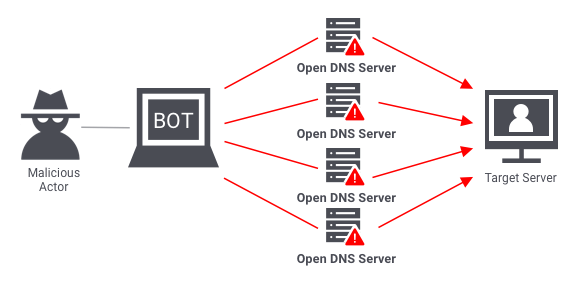
A Distributed Denial-of-Service (DDoS) attack is a coordinated attempt to overwhelm a target - a server, network, or web application - with malicious traffic, rendering it unavailable to legitimate users. In 2026, DDoS attacks remain one of the most common and disruptive cyber threats, with peak volumetric attacks now measured in terabits per second.
How Does a DDoS Attack Work?
Attackers typically control a botnet - a network of compromised devices (servers, IoT devices, home routers) - or leverage third-party amplification reflectors. When a command is issued, all nodes simultaneously flood the target, generating traffic volumes that overwhelm any single uplink or server.
Modern DDoS tools (including legitimate stress-testing platforms like Stressers.Zone) can launch attacks from centralized high-bandwidth infrastructure without relying on botnets, delivering consistent, controllable traffic for authorized testing purposes.
Layer 4 vs. Layer 7 - What's the Difference?
| Aspect | Layer 4 (Transport) | Layer 7 (Application) |
|---|---|---|
| Target | IP/Port, TCP/UDP sockets | HTTP/HTTPS endpoints, APIs |
| Goal | Saturate bandwidth / exhaust connections | Exhaust server CPU/RAM, bypass WAF |
| Protocols | UDP, TCP, ICMP, GRE | HTTP, HTTPS, WebSocket |
| Bypass challenge | Stateful firewalls, BCP38 | Cloudflare, DDoS-Guard, Imperva |
| Detection difficulty | Easier (anomalous PPS/BPS) | Harder (looks like legitimate traffic) |
| Mitigation | Scrubbing centers, BGP blackhole | WAF, CAPTCHA, rate-limiting |
Common DDoS Attack Types
UDP Amplification
Attackers spoof the victim's IP and send small requests to open UDP servers (DNS, NTP, SSDP, Memcached). The server returns a response many times larger to the victim - amplification factors can reach 10,000x for Memcached.
TCP SYN Flood
By sending thousands of TCP SYN packets without completing the handshake, an attacker fills the target's connection state table. The server allocates memory for each half-open connection until resources are exhausted.
HTTP Flood (Layer 7)
A volumetric flood of HTTP GET or POST requests overwhelms the web server's CPU and database backend. Unlike lower-layer attacks, these requests are syntactically valid - making them challenging to block without sophisticated fingerprinting.
JS Challenge Bypass
Advanced L7 tools resolve JavaScript challenges issued by CDN providers (Cloudflare Under Attack Mode, DDoS-Guard, BlazingFast). By executing the challenge environment server-side, the attack traffic passes as seemingly legitimate browser traffic.
How to Defend Against DDoS Attacks
-
Deploy a CDN/scrubbing center
Services like Cloudflare, Akamai, or Voxility absorb volumetric attacks before they reach your origin.
-
Anycast your infrastructure
Distribute traffic across multiple PoPs so no single node absorbs the full attack volume.
-
Monitor traffic anomalies in real time
Baseline your normal traffic patterns and alert on deviations in PPS, BPS, or connection rate.
-
Rate-limit and firewall at the edge
ACLs, uRPF, and BCP38 filter spoofed source IPs before they hit your servers.
-
Stress-test proactively
Use a platform like Stressers.Zone to identify weaknesses under controlled conditions before an adversary does.
Why Stress Test Your Own Infrastructure?
A DDoS stress test lets you measure your actual resilience - not your assumed resilience. It answers questions like:
- At what bandwidth does my CDN start dropping legitimate requests?
- Can my firewall handle 50 Gbps of UDP amplification without collateral damage?
- Does Cloudflare's JS challenge mode stop my application from serving real users?
- How long does it take my team to detect and respond to an active attack?
Ready to Test Your Infrastructure?
Stressers.Zone provides professional-grade Layer 4 and Layer 7 stress testing. Start for free - no credit card required.
Get Started Free